
Affordable housing is a complicated kind of construction — technically, financially, and in the public trust it requires. It rewards developers who understand how buildings actually get built, how capital actually flows, and how communities actually use the homes created for them. TrueHaven was built to be that kind of developer.
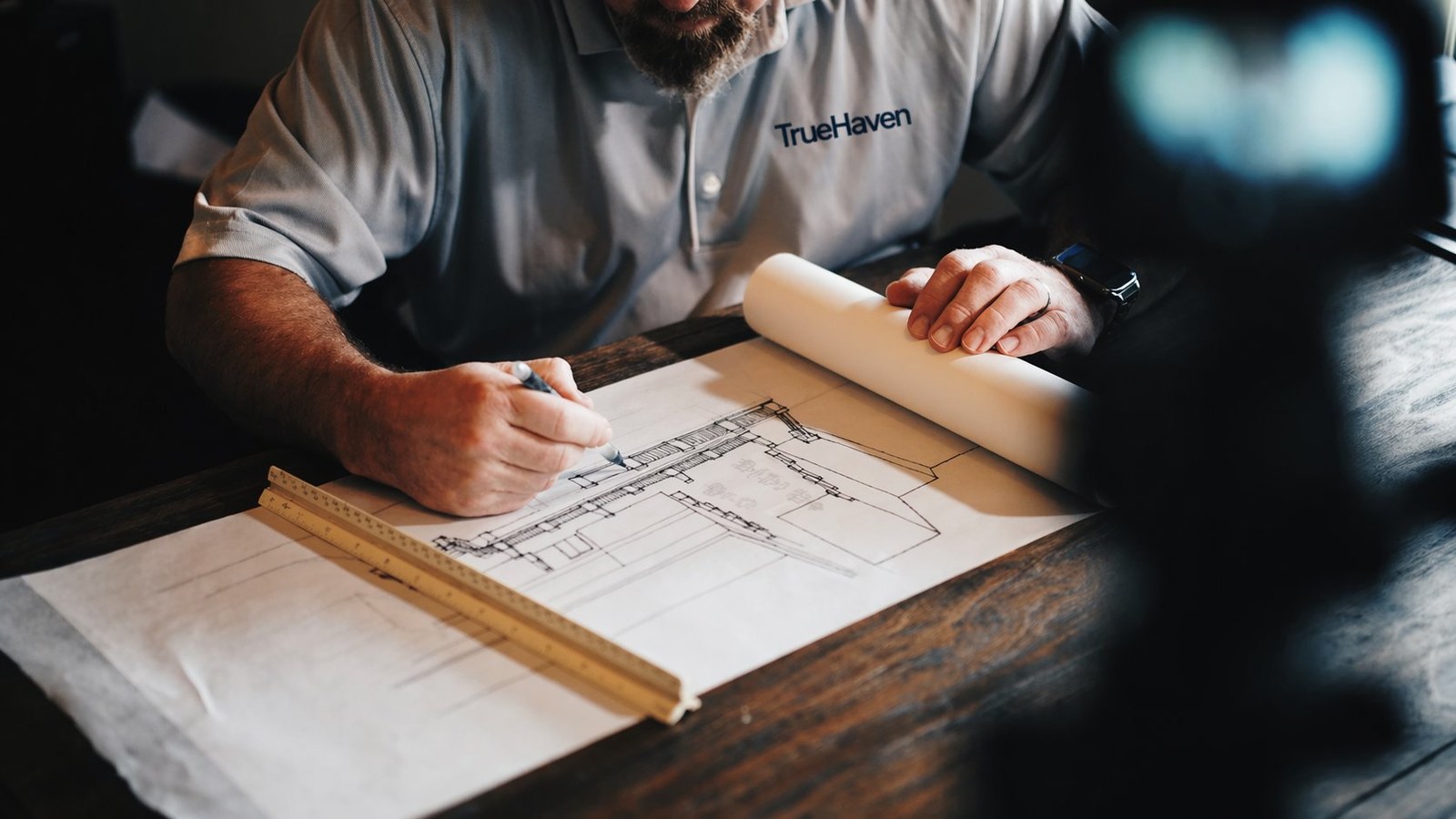
The affordable housing industry is largely organized around capital. Most developers start with a deal, raise against it, and outsource the hard work of building to a general contractor whose incentives don't always align with the project. That model produces buildings. It doesn't always produce good ones.
TrueHaven is organized differently. We are led by an operator whose career began on the construction side of this industry — running multifamily jobs, managing builders, solving problems in the field at the scale where they actually occur. That lineage doesn't just shape how we build. It shapes how we underwrite, how we select sites, and how we read a set of plans before a shovel ever touches the ground.
When something goes wrong on a project — and on every project, something will — we know what we are looking at.
We believe affordable housing is made or lost at the front end. Our underwriting discipline starts before a site is under control and carries through every phase of development.
Sites that make sense.We evaluate each opportunity against its market, its infrastructure, its zoning and entitlement path, and its long-term fit with the households we are building for. We pass on more than we pursue.
Capital stacks that hold up under stress.We structure our deals to stand on their own fundamentals — supported by tax credit equity, soft and hard debt, and where appropriate, PBV and other subsidy layers — so that our communities are resilient to interest rate moves, construction cost escalation, and lease-up slower than plan.
Construction plans we can actually build.Every budget we commit to has been stress-tested against the realities of the market we are building in: labor, materials, subcontractor capacity, and the specific site conditions of the property.
LIHTC development is inherently collaborative. Nothing we build gets built without housing authorities, state allocators, syndicators, lenders, municipal planners, and community partners saying yes — often repeatedly, over years.
We show up as partners, not as developers imposing projects on places. That means straightforward communication, responsive execution, and a willingness to shape our work to fit the community it is serving rather than the other way around. Our relationships in the public and private sides of this industry are not a sales channel. They are the foundation of the work.
The ribbon cutting is the beginning, not the end. Affordable housing is a fifteen-to-thirty-year commitment to the households who live there and the communities that host the property. Long-term performance depends on decisions made long before residents move in — the quality of the construction, the durability of the systems, the workability of the property management relationship, and the integrity of the regulatory compliance framework.
We develop with that horizon in mind. Our goal is not to build communities that function for a year. It is to build communities that are still performing for their residents decades later.